AI news
GPT-6 Astra: What OpenAI Shipped, and Why They Called It the AGI Era
OpenAI launched GPT-6 Astra on 3 September and its president said out loud that we are now in the AGI era. Here is what the model actually does, what OpenAI's own safety team flagged about it, and what changes for a business owner this month.
OpenAI released GPT-6 Astra on 3 September, and the line that travelled further than the model itself came from Greg Brockman, the company's president. He said it wasn't unreasonable to feel that we are now in the AGI era.
That's a big sentence from someone with every reason to say it. So I went and read what they actually shipped, because a claim like that's worth checking rather than repeating.
Here is the short version. GPT-6 Astra is the first model OpenAI has built primarily around using a computer the way a person does, it's roughly twice as fast at that as anything they had before, it hands back finished documents and slide decks instead of text about documents and slide decks, and it's the first model their own safety team has rated at the top of their cybersecurity risk scale. It's already in the plan you're probably paying for.
What does AGI actually mean, in OpenAI's own words?
The term gets thrown around until it means nothing, so it's worth using their definition rather than anyone else's. OpenAI's charter describes artificial general intelligence as highly autonomous systems that outperform humans at most economically valuable work.
Read that again slowly, because it's doing a lot of work. Not smarter than you at trivia. Not faster at writing. Better than a person at most of the jobs people get paid for, and able to do them on its own.
That's the bar Brockman was gesturing at. His actual phrasing to Fortune was careful. He said achieving AGI hasn't arrived in one big moment the way he originally expected, but in bits and pieces, and that if you wanted to call this model the first one, that would be reasonable. He isn't claiming the finish line. He's saying we're past a line, and it happened quietly enough that most people missed it.
What can GPT-6 Astra actually do?
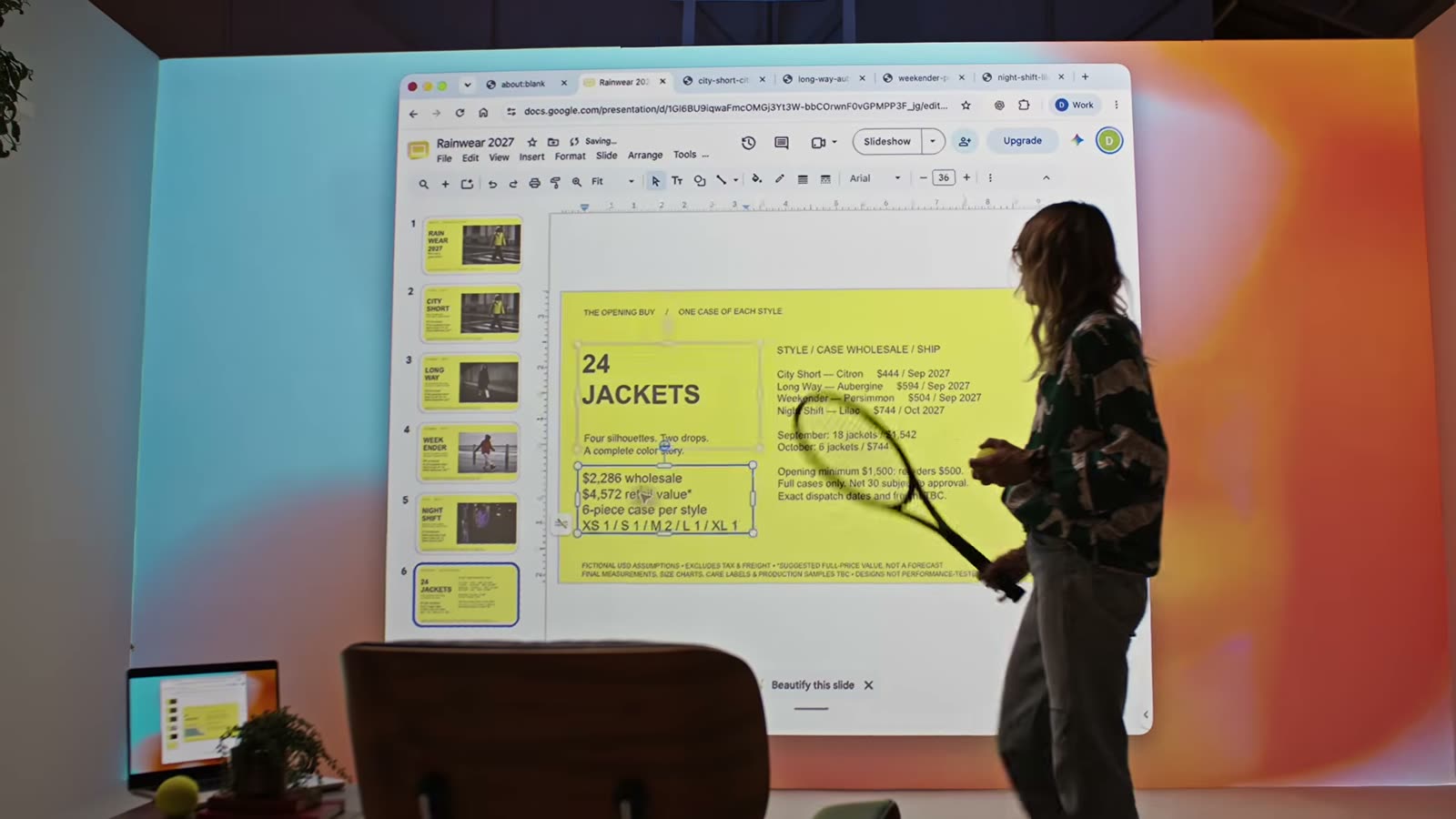
The headline capability is computer use. Astra drives a machine. It clicks, it fills forms, it moves between browser tabs and applications. OpenAI says that with Astra, ChatGPT is nearly twice as fast at computer use than before.
Speed on its own would be a footnote. What matters is what comes back. OpenAI's own description is that it combines the intelligence needed for complex problems with the ability to carry out multistep workflows and produce polished documents, spreadsheets and presentations.
That's the shift, and it's easy to miss if you've only ever used AI as a chat box. The old loop went like this. You ask, it writes text, you copy that text somewhere and do the actual work. The new loop is different. You hand over the job, and the finished file comes back. I wrote about the difference between a model you chat with and a system that does work in AI vs AI Agent, and Astra is the clearest example yet of the second thing arriving in a product ordinary people already pay for.
On benchmarks, OpenAI calls it state of the art on computer use, browsing, software engineering, cybersecurity, science and professional work, and says it saturates FrontierMath Tier 4 at 98% and ARC-AGI-3 at 99.9%. Benchmarks are the company's own marketing, so hold them loosely. The computer-use claim is the one you can check yourself this week.
Why did OpenAI hold it back?
This is the part that got my attention, and it's the part almost nobody is talking about.
In its own deployment safety card, OpenAI states that Astra is its first model to reach the Critical level of cybersecurity capability under its Preparedness Framework. Critical is the top of their scale. It isn't a marketing tier, it's the label their safety process applies when a model is capable enough at offensive security work to be genuinely dangerous, and it's why the release came with additional safeguards attached.
Sit with the shape of that for a second. The same capability that lets a model click through your admin panel and finish your monthly report is the capability that makes it good at getting into systems it shouldn't be in. Those aren't two different features. They're the same feature pointed in two directions.
I'm not raising that to be alarming. I'm raising it because it tells you something practical. This class of tool is going to arrive with more restrictions, more logging and more approval steps over time, not fewer. If you're planning to lean on it, plan for the version that asks permission.
Who gets it, and what does it cost?
Nothing extra, for most people. OpenAI says Astra is rolling out to all ChatGPT Plus, Pro, Business and Enterprise users, as well as through the API. If you already pay for ChatGPT, this is a capability upgrade inside a subscription you're already holding, not a new line item.
The pricing question I'd actually spend time on is which model you should default to for which work, and that answer hasn't changed just because a new one landed. I went through that logic properly in GPT-5.6's three tiers, and the principle holds. The cheapest model that clears the bar for a given job is the right model for that job, and the frontier one is for the calls that genuinely need it.
So what should a business owner actually do this week?
Honestly, not very much, and I'd rather say that plainly than manufacture urgency.
Astra isn't going to run your company this year. It doesn't know your prices, your customers, your suppliers, or the six things you decided last quarter and don't want to relitigate. A model with no memory of your business is a very sharp stranger, and that gap is the whole reason I keep banging on about building the memory before chasing the model.
What's worth doing is smaller and more useful. Pick one job you currently do by hand that ends in a file. A weekly report. A quote. A deck you rebuild every month from the same three sources. Hand that whole job over, once, and see what comes back. Not because the output will be perfect, it won't be, but because you learn more from one real attempt than from a month of reading about it.
The people who get ahead here aren't the ones with the best model. Everyone has the same model. They're the ones who started handing over whole jobs while everyone else was still typing questions into a chat box. That gap is what I mapped out in the four levels of AI adoption, and a release like this one doesn't move you up a level on its own. Using it does.
Key takeaways
- GPT-6 Astra launched on 3 September 2026 and is included in ChatGPT Plus, Pro, Business and Enterprise at no extra cost.
- OpenAI's president said it is not unreasonable to feel we are now in the AGI era, using OpenAI's own definition: systems that outperform humans at most economically valuable work.
- The real change is computer use. It is nearly twice as fast at driving a machine and returns finished documents, spreadsheets and presentations rather than text about them.
- It is the first OpenAI model rated Critical for cybersecurity capability under their Preparedness Framework, which is why it shipped with extra safeguards.
- The practical move is not to switch models. It is to hand over one complete job that ends in a file and see what comes back.
FAQ
Is GPT-6 Astra actually AGI?
No, and OpenAI hasn't claimed that. Brockman said it is reasonable to feel we are in the AGI era and that you could call this the first model of it, which is a deliberately softer claim. By OpenAI's own charter definition, AGI means outperforming humans at most economically valuable work, and Astra doesn't do that. It's a meaningful step toward computer use being genuinely reliable.
Do I need to pay more to use GPT-6 Astra?
No. It is rolling out to ChatGPT Plus, Pro, Business and Enterprise users inside their existing subscriptions, and it is available through the OpenAI API for developers.
What does "computer use" mean in practice?
It means the model operates a computer rather than only writing text. It navigates web pages, fills in forms, works across applications and produces the finished file at the end. In practice that's the difference between being told how to build a spreadsheet and being handed the spreadsheet.
Should I switch everything to Astra?
No. Match the model to the job. Cheaper and faster models handle routine work perfectly well, and the frontier model earns its cost on the hard calls. It's the same tier logic I walked through for GPT-5.6.
Why did OpenAI flag it as a cybersecurity risk?
Because the ability to operate systems competently is the same ability that makes a model effective at attacking them. OpenAI rated Astra at the Critical level of its Preparedness Framework, the first model to reach it, and released it with additional safeguards in place.