ChatGPT
OpenAI Is Giving Students Four Months of ChatGPT Plus Free
Four free months of ChatGPT Plus, worth about $80, claimable until 31 October 2026. What the offer actually includes, who qualifies, the exact claim steps, what GPT-6 Astra can build once you have it, and twenty prompts to start with.
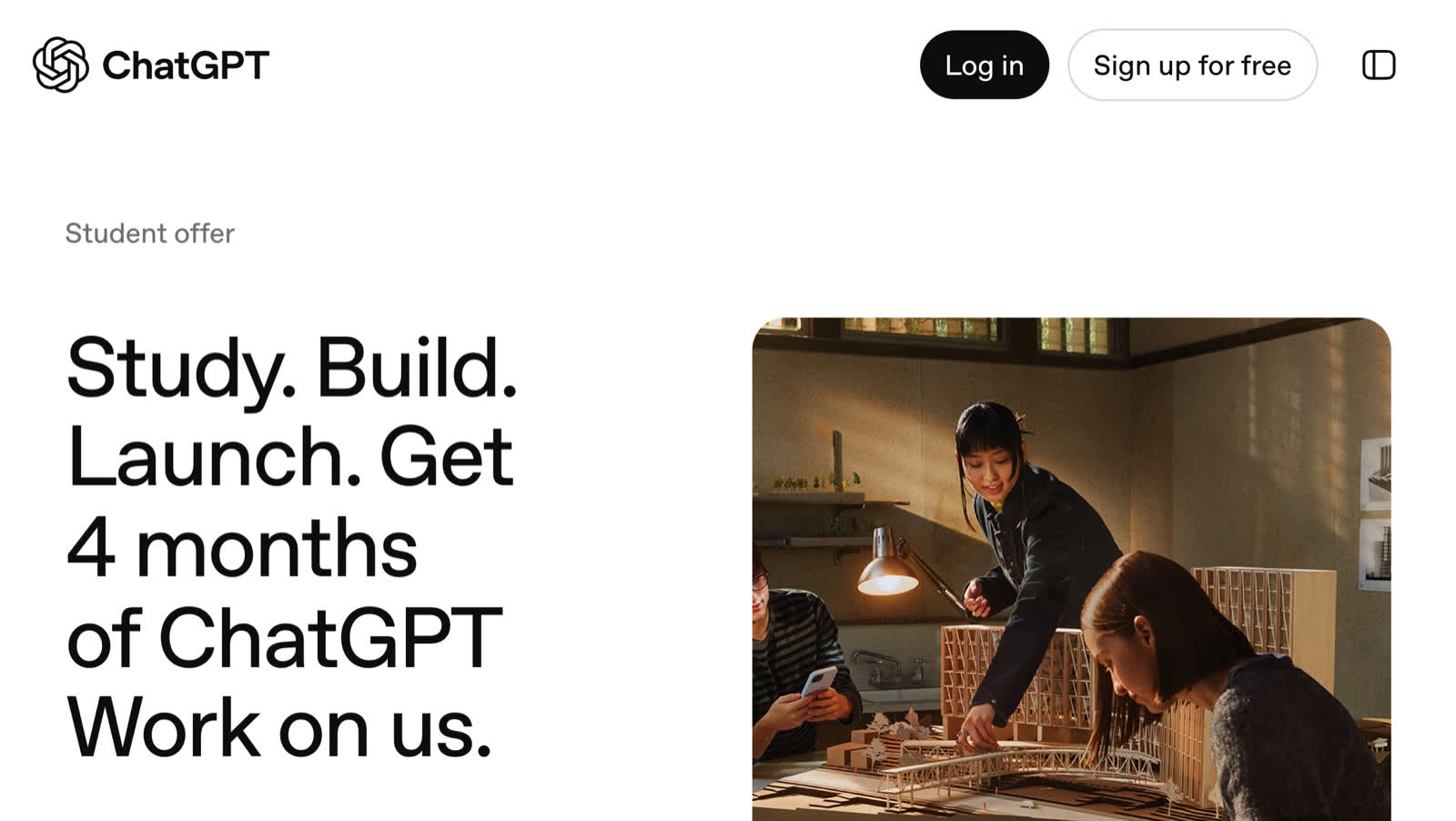
OpenAI is giving students four free months of ChatGPT Plus, worth about $80, and the claim window closes on 31 October 2026. You verify once with a school-issued email, you get the full Plus plan including ChatGPT Work, and it renews at $20 a month afterwards unless you cancel.
That's the whole thing. The rest of this is the fine print the video didn't have room for, the three-step claim, and the part I actually find interesting, which is what the model on the other side of that paywall can build in an afternoon.
What exactly is OpenAI giving away?
Four free monthly billing periods of ChatGPT Plus, starting on the day you claim. Not a trial of a cut-down version, and not last year's model.
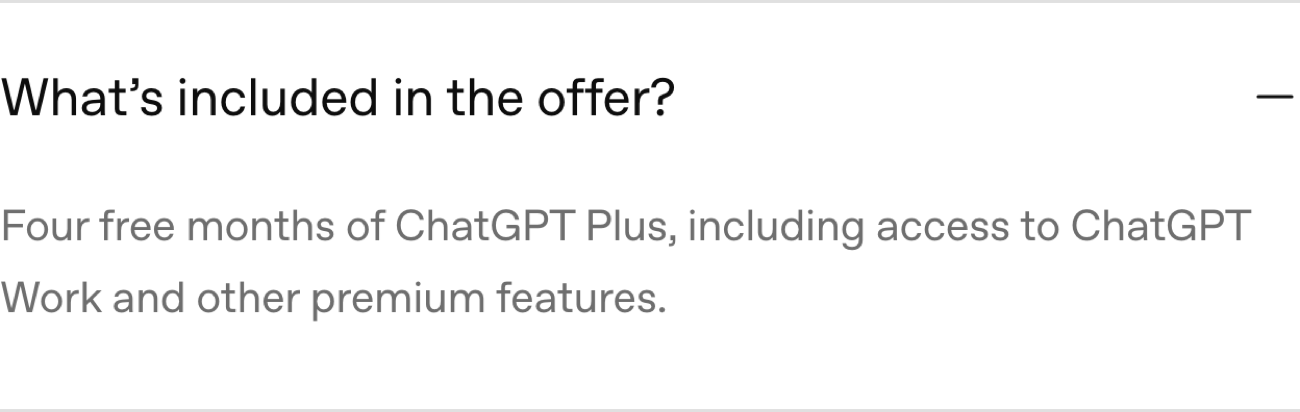
The offer page leads with ChatGPT Work, which is the newer agentic surface, and the FAQ confirms it sits inside a normal Plus subscription along with the other premium features. So you're getting the same plan a paying subscriber gets.
The terms are short and worth reading before you click anything.
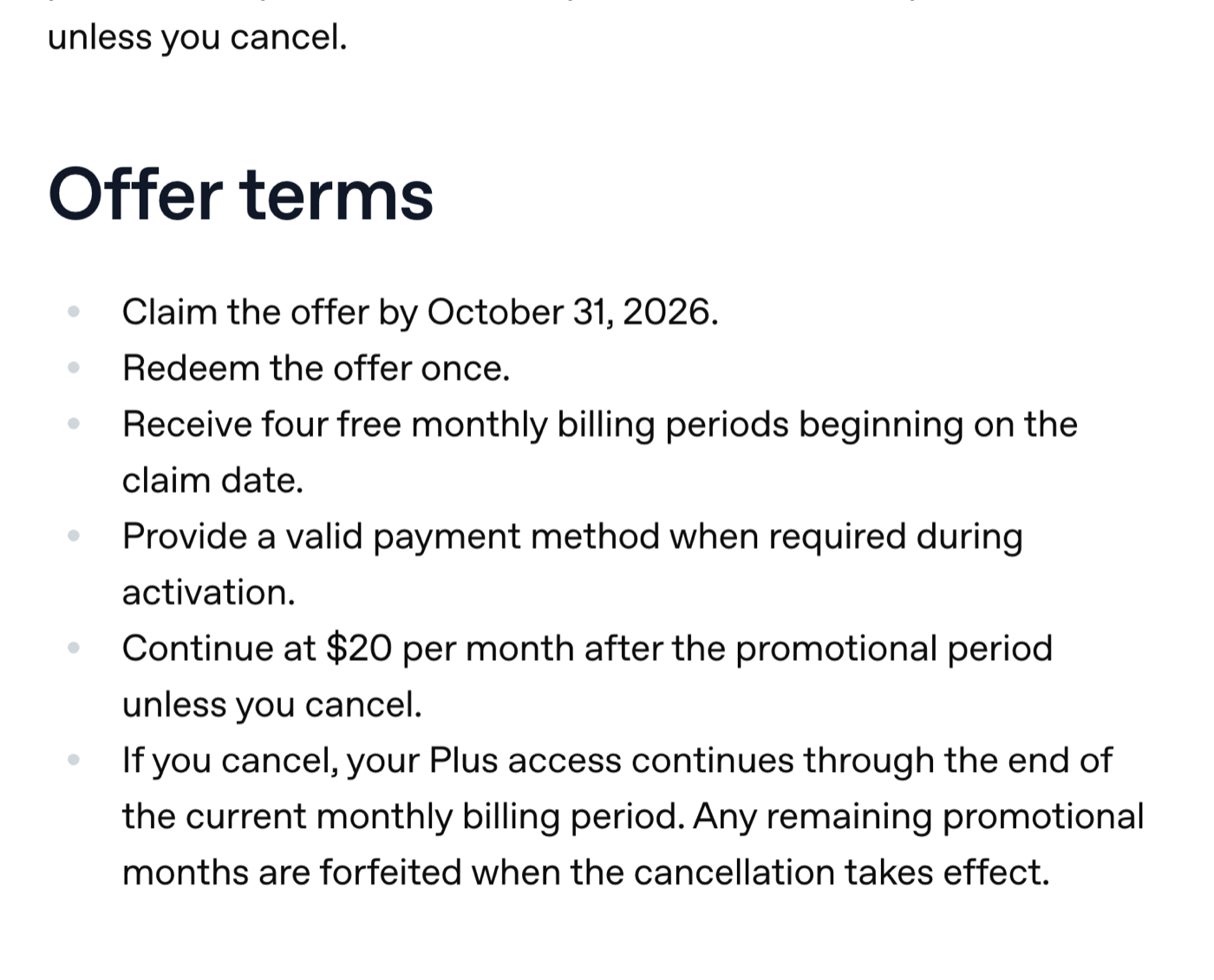
Four of those bullets matter more than the rest.
You redeem once, so there's no stacking it across accounts. A valid payment method is required at activation, which catches people out because it feels like a paid signup even though nothing is charged for four months. It continues at $20 a month after the promotional period unless you cancel. And the one almost nobody reads: if you cancel, any remaining promotional months are forfeited when the cancellation takes effect. So cancelling in month two doesn't bank you months three and four. If you want all four, you set a reminder for month four instead.
Who can actually claim it?
This is the part that isn't in the video, and it's the part that decides whether the rest of this page is useful to you.
The offer is for full-time and part-time students enrolled at eligible U.S. degree-granting institutions. It is not global. The 2025 version of this promotion ran across the United States and Canada for two months; this one is four months and, per the offer terms and reporting on the launch, United States only.
If that isn't you, don't close the tab yet. The prompts further down work on the free tier and on any other assistant, and the capability section is the honest reason to care about this model at all whether or not you're the one getting it free.
How do you claim it?
Three steps, and the whole thing takes about two minutes if your school email still works.
1. Go to the offer page. It's at chatgpt.com/students/2026. Sign in to the ChatGPT account you actually want the four months applied to, because the offer attaches to whichever account you're signed into when you verify.
2. Verify you're a student. OpenAI hands this off to SheerID, and you'll need a school-issued email address to get through it. Your ChatGPT account itself does not have to use that address. That confused a lot of people, so it's worth saying plainly: you can keep your personal Gmail on the account and verify with the school one.
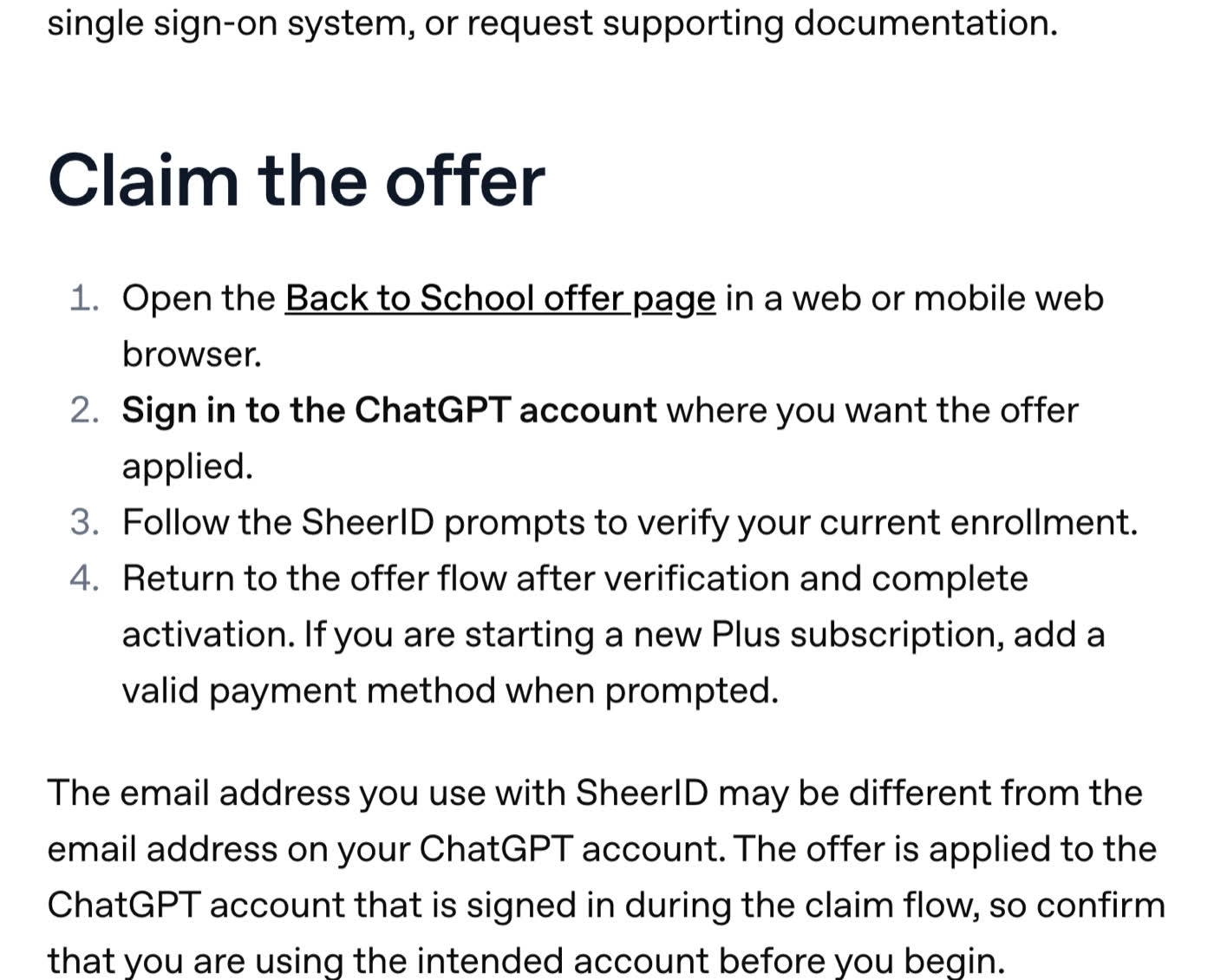
3. Add a card and confirm. This is the step people stall on. The card is there so the subscription can roll over at the end, not so you can be charged now. If you don't want it to roll over, put the reminder in your calendar the same minute you finish, four months out, and move on.
Then it's live on that account.
What can the model actually build?
I made a second video about the same offer because the $80 is the least interesting thing about it. The model you get for those four months has been doing things that used to take a team and a month.
Three builds have been going around, and all three have original posts you can go and watch rather than take my word for.
The first is a playable game generated from a single prompt, in a clip from Higgsfield's own film on the model, and the kart race in it is the part that made me sit up, because it runs like a real game, with rules.
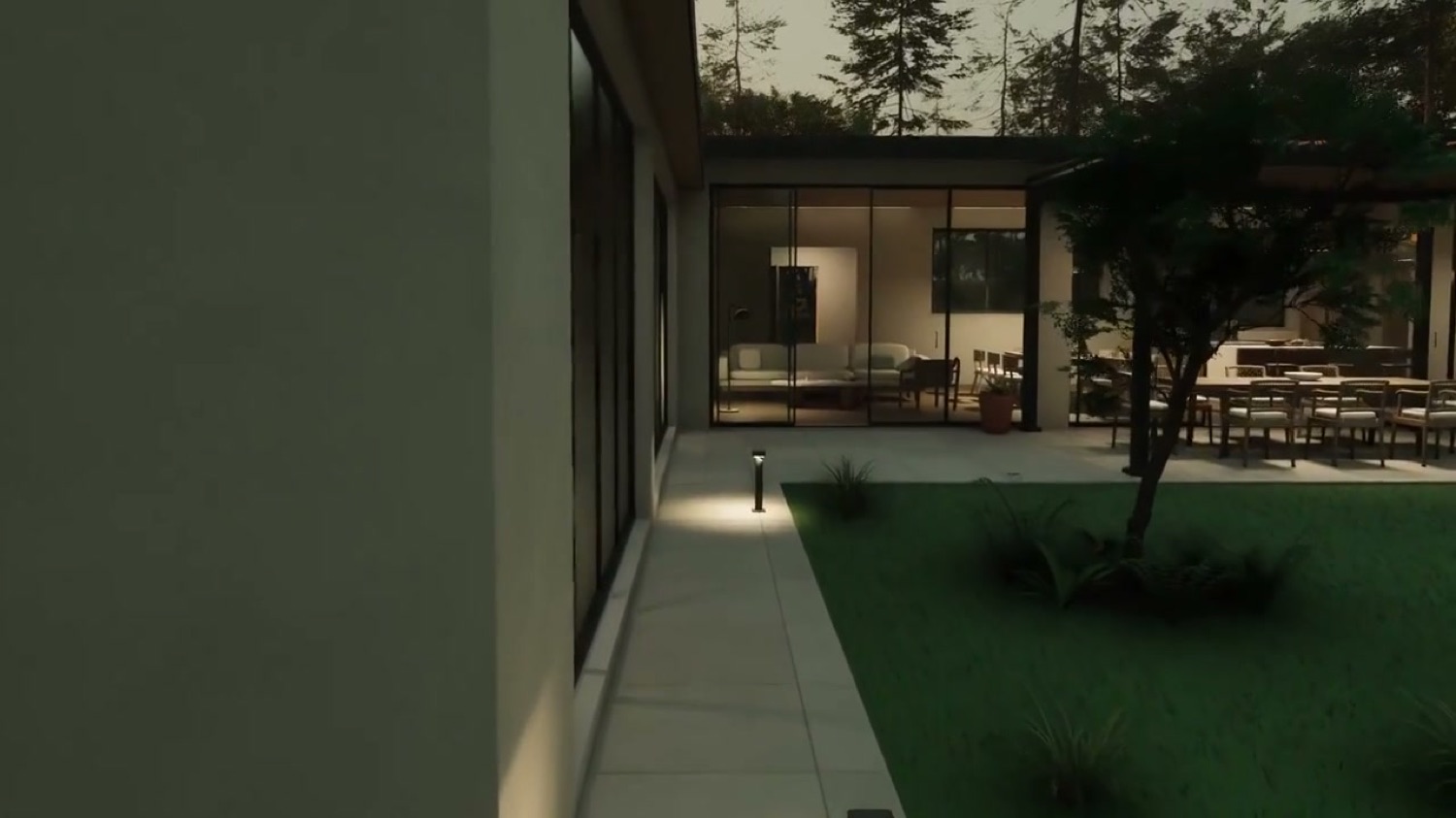
The second is a full house built in Blender that you can walk through. Sanskriti Naruka posted the walkthrough.
The third is the one that's actually closest to a student's real life. ashe built a 3D anatomy site, the Human Atlas, for a class. Thousands of separately modelled pieces you can pull apart and inspect, as a website, for a course assignment.
I want to be careful about what I'm claiming here. These are three people's demos, posted by them, and a demo is always someone's best take rather than their average afternoon. What they establish is that the ceiling moved, rather than that you'll get the same result on your first try. The thing that used to stop a student project at the idea stage was never the idea, it was the twenty hours of building nobody had, and that is what moved.
Twenty prompts to start with
I promised these in both videos, so here they are. They're ordered roughly by how soon in a semester you'd reach for them, and they're written to be pasted and then edited, not admired.
Reading and lectures
- "These are my lecture slides. Explain this deck to me like I missed the class, then list the five things most likely to be on the exam."
- "Summarise this paper in plain words, then tell me what its weakest assumption is and why someone might disagree with it."
- "I'm going to paste a chapter. Turn it into twenty flashcards, question on one line, answer on the next, no formatting."
- "Explain this concept three times: once for a ten-year-old, once for a first-year student, once for someone marking my exam."
- "Read these three sources and tell me where they actually disagree with each other, not where they overlap."
Writing and assignments
- "This is my assignment brief and my draft. Mark it against the brief, point by point, and tell me which criterion I'm weakest on."
- "This paragraph is doing too much. Split it so each paragraph makes one point, and tell me which point I never actually proved."
- "Argue the opposite of my thesis as strongly as you can, so I can see what I need to answer."
- "Cut this from 1,200 words to 800 without losing an argument. Show me what you cut and why."
- "Turn my bullet-point notes into an outline with one sentence per section, then stop. Do not write the essay."
Building things
- "I want to build [X] for a class project. Give me the smallest version that still demonstrates the idea, and tell me what to leave out."
- "This is my code and the error. Explain what's actually broken before you fix it, then fix it."
- "Walk me through setting this up from a completely empty folder, assuming I've never used this tool."
- "Review this like a marker who is tired and has forty of these to get through. What loses marks fastest?"
- "Write the README for this project: what it does, how to run it, what I decided and why, and what it can't do yet."
Studying and exams
- "Quiz me on this topic one question at a time. Don't tell me the answer until I've tried."
- "I got this question wrong. Diagnose what I misunderstood rather than just giving me the right answer."
- "Make me a two-week revision plan from this syllabus and my exam date, and be realistic about how much fits in a day."
- "This is a past paper. Tell me what topic each question is really testing underneath the wording."
The one worth keeping
- "Before you answer, ask me the three questions you need answered to give me a genuinely useful response."
That last one is the one I actually use most, and it isn't a student trick. Most bad AI output is a bad brief, and making the model ask first fixes more than any clever phrasing does.
FAQ
Does the free ChatGPT Plus student offer charge my card?
No. A card is required when you activate, but nothing is charged until the four promotional months end. After that it renews at $20 a month unless you cancel.
What happens if I cancel the ChatGPT Plus student offer early?
Any promotional months you had left are forfeited when the cancellation takes effect. If you want all four, set a reminder for month four and cancel then, if you're going to.
Does my ChatGPT account need to use my school email to get the student offer?
No. You verify through SheerID with a school-issued email, but the account itself can stay on your personal address. The months attach to whichever account you're signed into when you verify.
Who can claim OpenAI's free ChatGPT Plus for students?
Full-time and part-time students at eligible U.S. degree-granting institutions, per OpenAI's offer terms. The 20 prompts in this article work on the free tier and on other assistants, so they're useful either way.
When does the ChatGPT Plus student offer close?
You have to claim by 31 October 2026. The four months start on the day you claim.
What I'd do with four free months
If I were a student right now, I wouldn't spend them on essays. Essays are the obvious use and the one with the least left over at the end of it.
I'd spend them building one thing that exists after the semester does. A site, a tool, a small piece of software for a problem in your own course. The three builds above took prompts and taste, not a degree in graphics programming, and the person who finishes one of those has something to show that a transcript can't say. I wrote up the fifteen-day version of exactly that recently, and the order in it works on any deadline you set yourself.
Four months is longer than it sounds and shorter than you'll treat it. The claim closes on 31 October 2026, and the thing you build with it is the part that outlives the subscription.