Claude Code
AI Job Search: The Free Claude Code Setup That Finds Jobs and Writes Your Applications
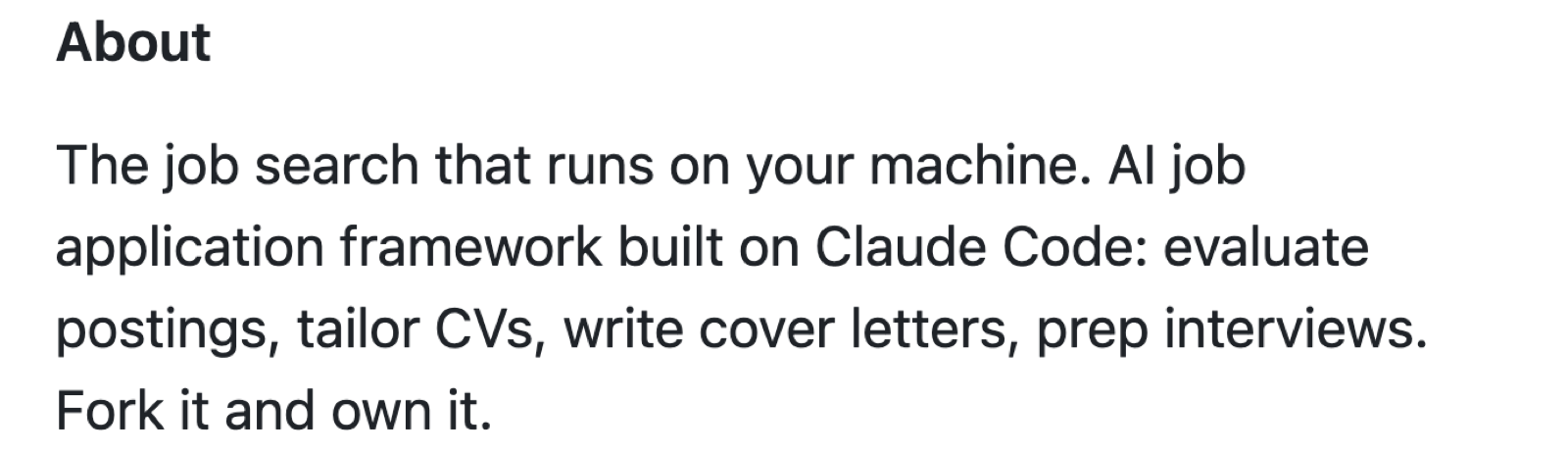
AI Job Search is a free, open-source framework for Claude Code that searches job boards, scores each posting against your profile, tailors your CV and cover letter, and has a second agent critique every draft. Who it's built for, how to swap in your own country's job sites, and the setup steps.
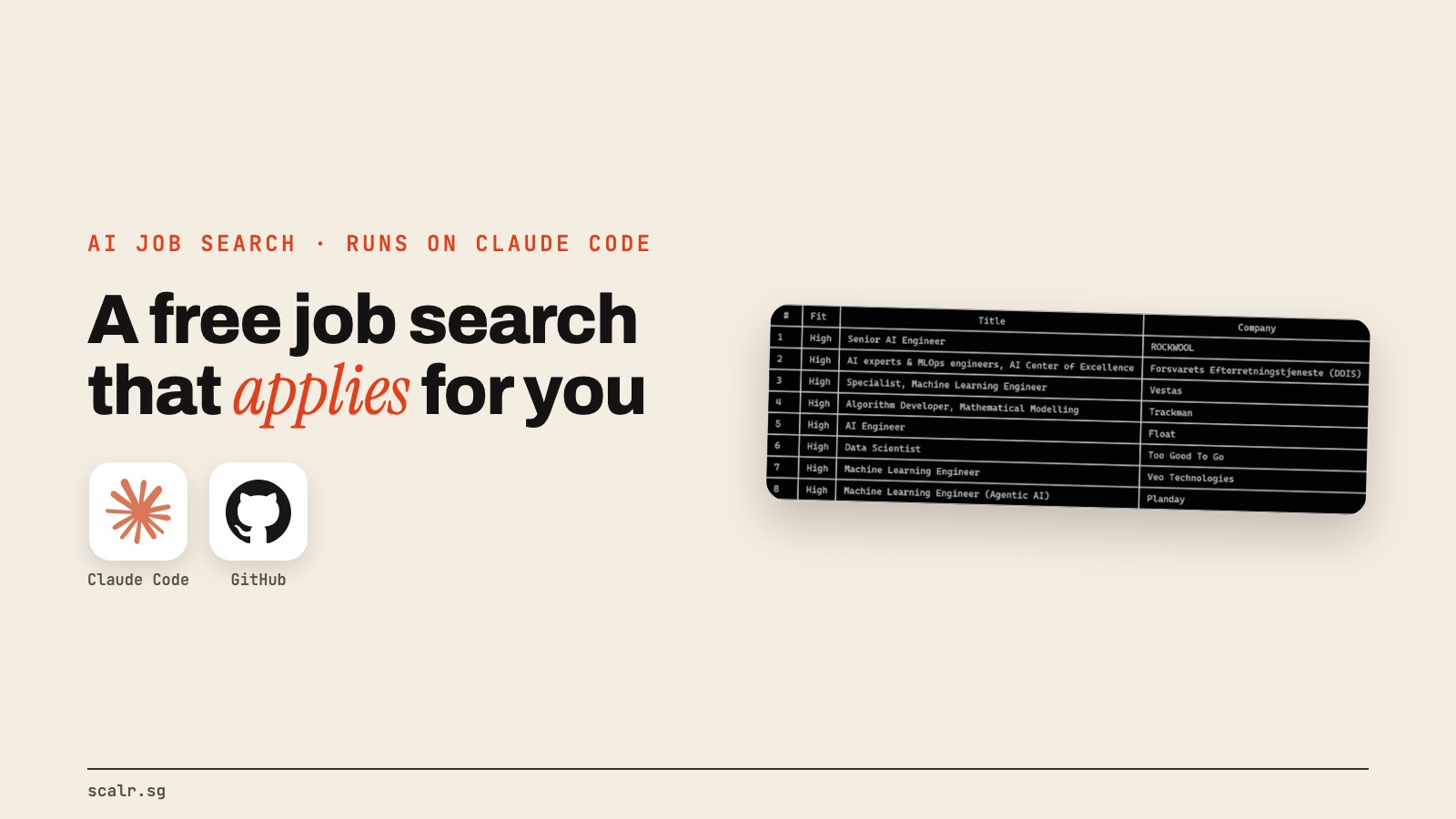
If you hate writing cover letters, this one's for you. AI Job Search is a free, open-source framework that turns Claude Code into a job application assistant. It searches job boards for roles that match you, scores how well each one fits, tailors your CV and cover letter to the posting, and has a second agent critique every draft before you see it. It had nearly 59,000 stars on GitHub on 20 October.
Who built it, and does it work?
It's built by Mads Lorentzen, a geophysicist whose job was cut in late 2025. He built it to run his own job search. In the README he writes that it took him through "sixty-nine tailored applications, twenty first interviews, and one signed contract," and he started as an AI engineer in June 2026. He also says he told every employer he was using it, and that it "usually sparked a genuine technical conversation" instead of counting against him.
What does it actually do?
There are three core commands.
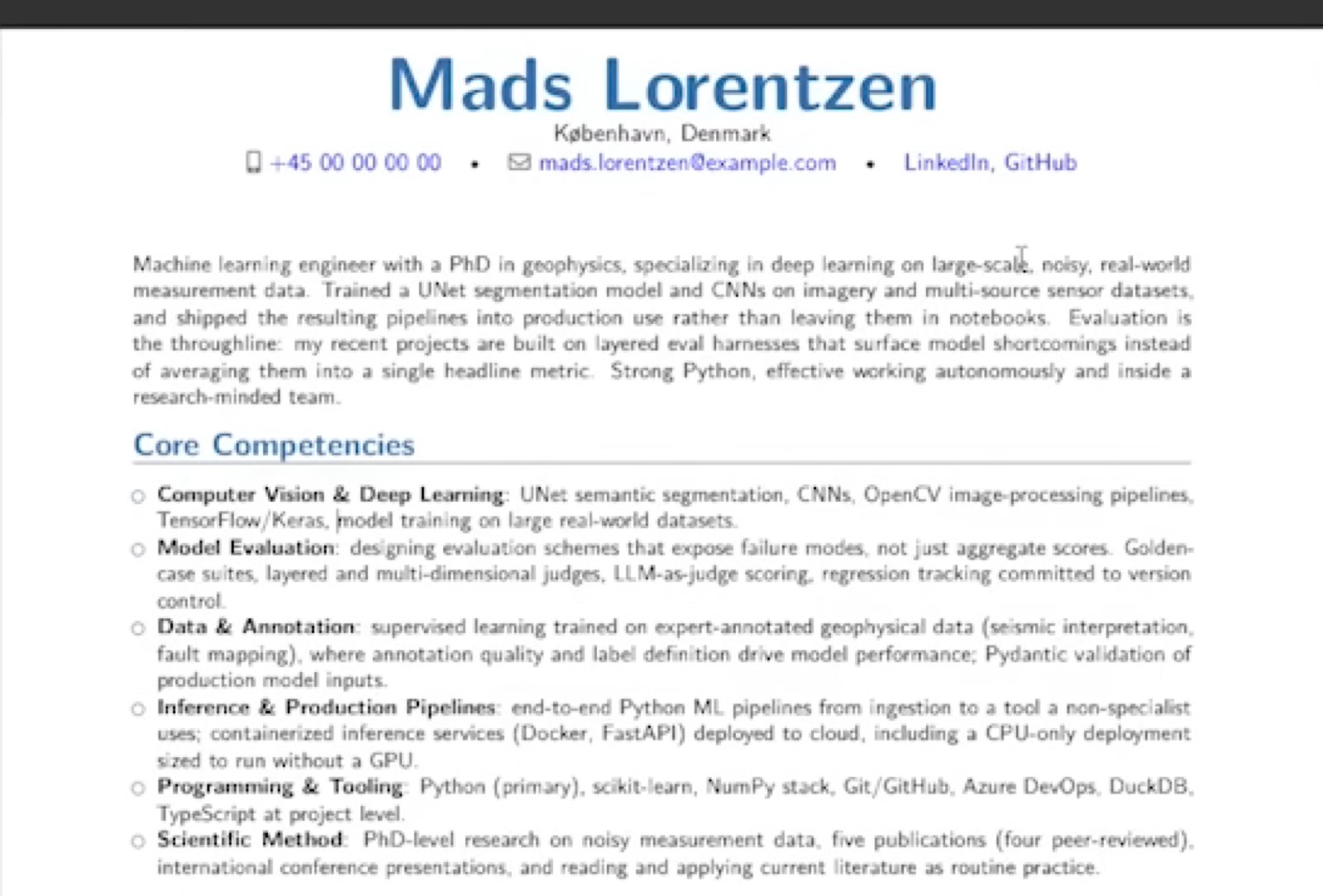
/setup builds your profile. It can read a folder of your documents (your CV, a LinkedIn export, diplomas, past applications), take a CV you paste in, or interview you.
/scrape searches job portals for roles that match your profile, removes duplicates, and shows you the matches sorted by fit.
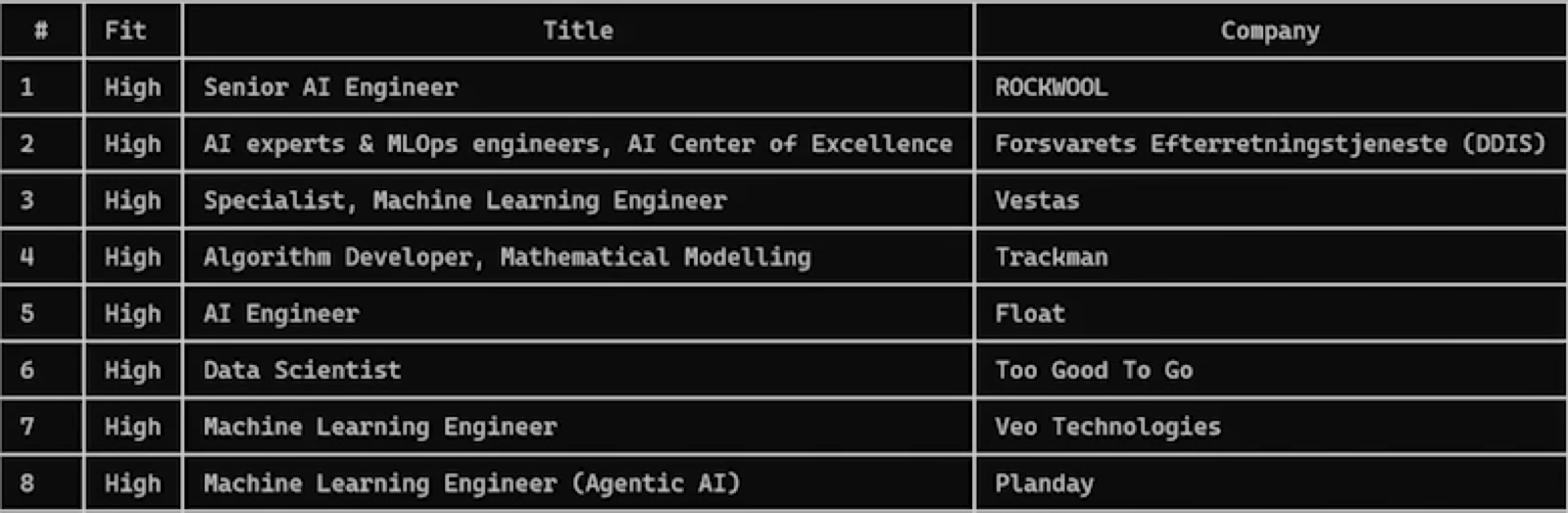
/apply takes a job link, or the job description pasted in, and runs the whole application: it evaluates your fit, drafts a tailored CV and cover letter, has a second agent review them, revises, and gives you the final files.
The second agent's the part I like most. The README calls it drafter-reviewer separation: "The drafter writes; a second Claude agent, spawned with a fresh context, researches the company and critiques the drafts. The drafter then revises."
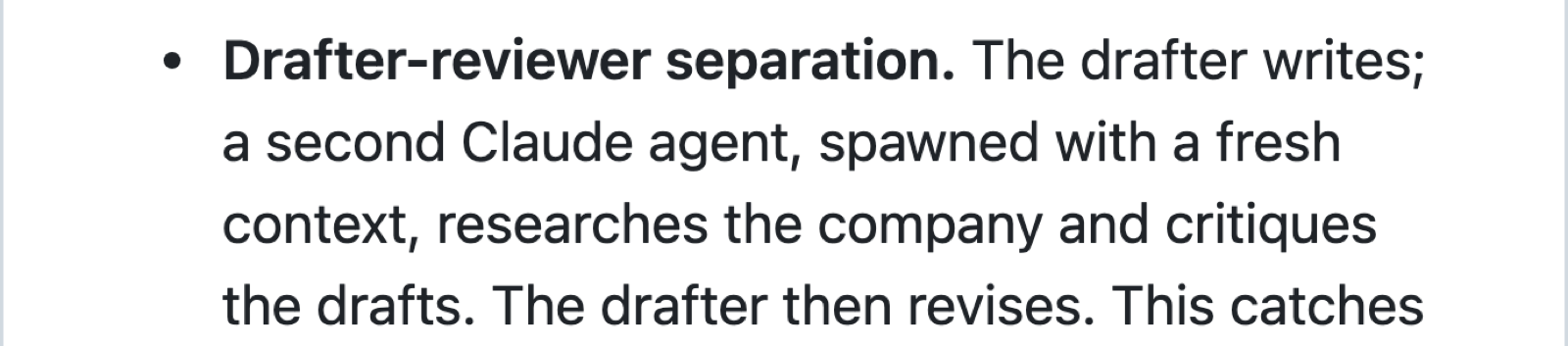
That makes sense to me, since a fresh pair of eyes, even a machine's, tends to catch what the writer stopped seeing. There are also extra commands once you're set up: /interview builds a prep pack for an interview you've booked, /outcome tracks what happened to each application and drafts follow-ups, and /rank batch-scores a big list of jobs into a shortlist.
Who is it built for?
The video didn't have time for this part. The core workflow of profiling you, judging fit and the draft-and-review pipeline works in any language and any country, but the job board search is built for Denmark. The README says the portal search skills cover "the Danish market (Jobindex, Jobnet, Akademikernes Jobbank, etc.)", with LinkedIn search included too.
How do you swap in your own country's job sites?
The repo's got a command for exactly this. Once you're set up, run:
/add-portalAccording to the README, it investigates the job board you name (its search URLs, how results are laid out, its access rules), builds a search skill for it in the same shape as the Danish ones, and test-runs a live search before adding it. So if you're in Singapore, you'd run it for the job boards you actually use, one at a time.
If a site blocks automated access, you don't need a portal at all for /apply. Paste the job description straight in instead of the link.
How do you set it up?
The README's prerequisites are Claude Code, Python 3.10 or newer, Bun, and a LaTeX installation for building the CV and cover letter PDFs (TinyTeX or MacTeX both work). That last one is the step I'd expect people to trip on.
Then, in a terminal:
gh repo fork MadsLorentzen/ai-job-search --clone
cd ai-job-search
python3 tools/install_portal_clis.py
claude
Inside Claude Code, run /setup, then /scrape, then /apply on a job you like.
One warning straight from the README, and it matters, is that a fork of a public repo is always public, and /setup writes your personal details into files in it. If this copy is just for your own job search, use a private repository instead of a fork. The README has a two-minute recipe for that in its SETUP guide.
Is it free?
The framework is free and MIT licensed. Running it needs Claude Code, and the README is upfront that "Claude Code has no free tier," so you need a Claude Pro, Max or Team plan, or Anthropic API credits.
If you'd like a second opinion on the CV it produces, run it through the seven-Claude hiring panel. One finds the jobs and writes the applications, and the other tries its hardest to reject them.
FAQ
What is AI Job Search on GitHub?
AI Job Search is a free, open-source framework by Mads Lorentzen that turns Claude Code into a job application assistant. It searches job boards, scores fit, tailors your CV and cover letter, and uses a second agent to critique every draft.
Does AI Job Search work outside Denmark?
The AI Job Search workflow works in any country, but its job board search is built for Danish sites like Jobindex and Jobnet. The /add-portal command builds a search skill for your own local job boards.
Is AI Job Search free to use?
The AI Job Search framework is free under the MIT licence. Claude Code has no free tier, so you need a Claude Pro, Max or Team plan, or Anthropic API credits.
What do I need to install for AI Job Search?
AI Job Search needs Claude Code, Python 3.10 or newer, Bun and a LaTeX installation such as TinyTeX or MacTeX for building the CV and cover letter PDFs.
Is my personal data safe in AI Job Search?
AI Job Search runs on your own machine, but /setup writes your details into the repo's files, and a fork of a public repo is always public. Use a private repository for your own job search.