ai
Five Rules for Using AI Every Day
After about two thousand hours inside these tools this year, these are the five rules I would give anyone using AI daily, plus the one rule I would take off most lists.
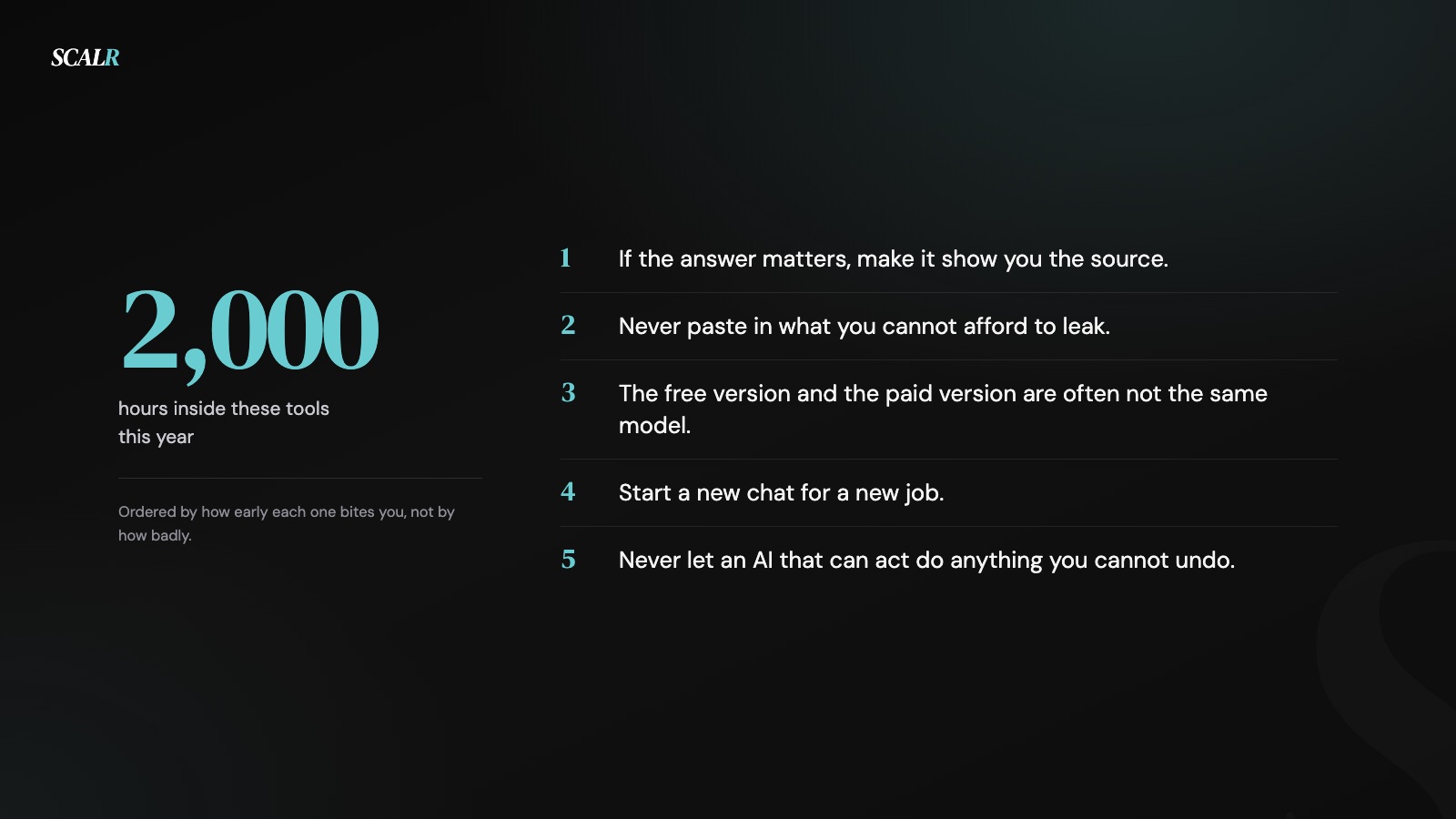
I have spent about two thousand hours inside these tools this year. Here are the five rules that came out of it.
- If the answer matters, make it show you the source.
- Never paste in what you cannot afford to leak.
- The free version and the paid version are often not the same model.
- Start a new chat for a new job.
- Never let an AI that can act do anything you cannot undo.
They're ordered by how early they bite you, not by how badly. Rule one will catch you this week. Rule two is the one with the highest cost if you get it wrong, and most people never get anywhere near it.
1. If the answer matters, make it show you the source
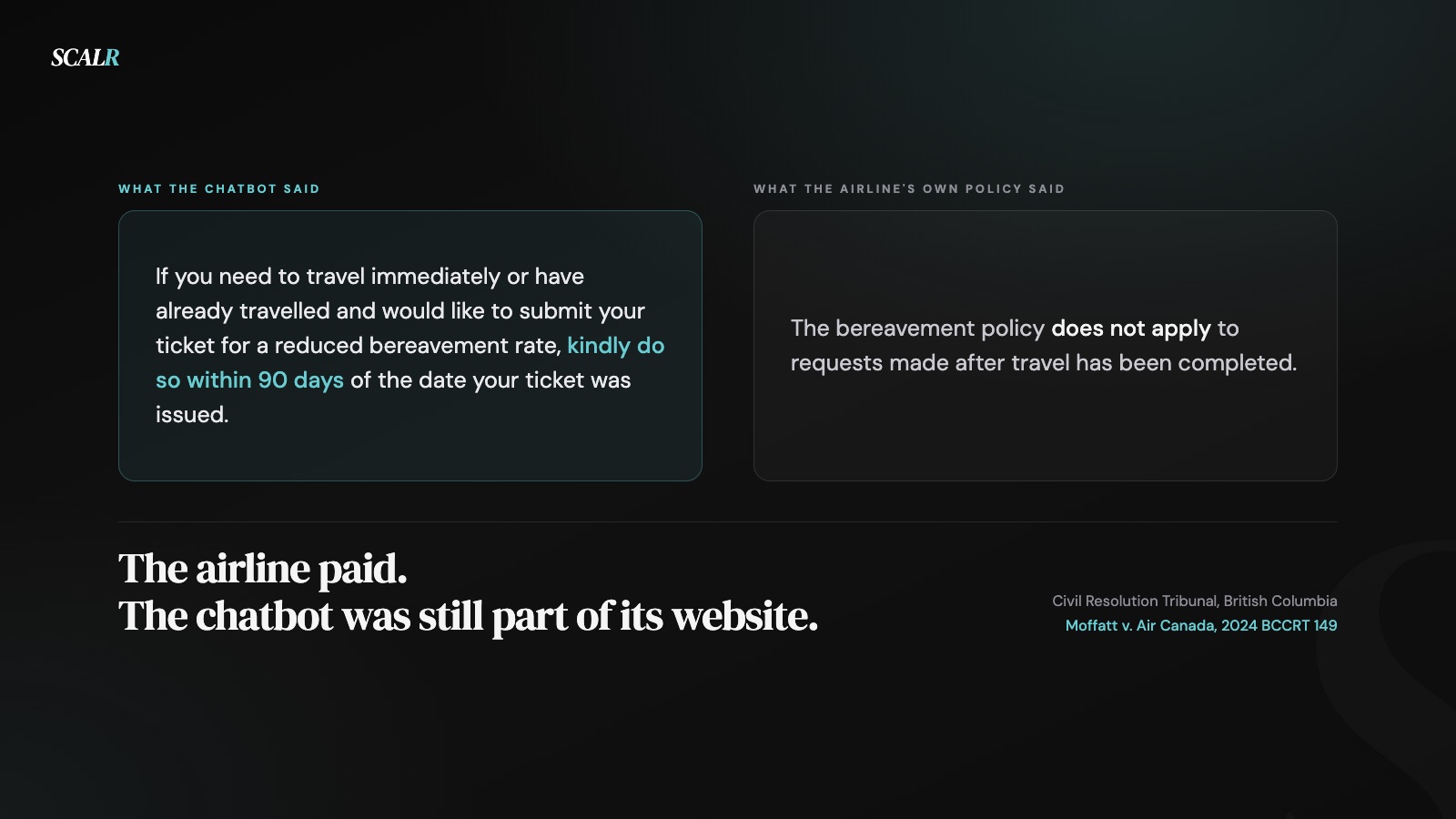
AI sounds most confident exactly when it is wrong. There's no wobble in the voice, no hedge, no tell. The made-up answer and the correct answer arrive in the same tone, which is why reading carefully does not protect you.
The concrete version: in 2023, two lawyers filed a brief built on six court decisions that did not exist, complete with case names and page numbers. One of them asked ChatGPT whether the cases were real. It said yes. A judge fined them US$5,000.
So the habit is to ask for the source and then actually open it. Not "cite your sources", which produces plausible-looking citations. Open the link. If there's no link, treat the claim as a starting point for your own check rather than an answer.
What it requires: about twenty extra seconds, and the discipline to spend them on the answers that matter rather than all of them. I go deeper into why this happens, and why better models will not fix it, in why your AI makes things up.
2. Never paste in what you cannot afford to leak
That means client details, passwords, API keys, signed contracts, and anything covered by an NDA.
The reason is simpler than the scary version people tell you. Once you've pasted it into a chat box, you've lost track of where it lives, who can see it, and what happens to it in a year, whether or not any company ever misuses it. That is true of any tool, and it is a bad position to be in regardless of who you trust.
The concrete version: the secrets my systems need never sit in a chat window. They live in a locked file on my machine that's never shared, and for anything that runs on a server they live in a secrets manager. I use Doppler, which has a free tier. The AI can use a key without ever seeing its value, which is exactly the arrangement you'd want.
What it requires: somewhere else for the secret to live, and about an hour to set it up once. This is the rule with the highest cost and the lowest daily friction, which is a rare combination and the reason it is worth doing properly.
3. The free version and the paid version are often not the same model
If you're judging AI by the free tier, you may be judging its weakest model, and a lot of people who say "I tried it, it wasn't that good" are describing exactly this.
The concrete version: as of August 2026, ChatGPT's free tier gives you GPT-5.6 Luna, which is the smallest model in that family. The bigger ones are behind a subscription. Claude works differently, where the paid tiers are mostly buying you more usage rather than different models, so it isn't a universal rule so much as a thing to check per tool.
The practical part is knowing which model you are actually talking to right now, because on most of these tools it can change underneath you when you hit a limit.
What it requires: either money, or just the awareness that the free experience is not the ceiling. Twenty dollars a month is the usual price, and for anyone using this daily for work it isn't a close call.
4. Start a new chat for a new job
One long conversation gets worse as it grows. It'll lose track of what you told it, and then, because of rule one, it fills the gaps confidently rather than admitting it lost the thread.
This is measurable rather than a feeling. Researchers at Chroma tested 18 models across four labs and every one of them performed worse as the input got longer, on tasks that stayed exactly as difficult. They named it context rot. Most people call it the chat getting dumb.
The concrete version: I no longer keep one running conversation. New task, new chat, every time. What the AI needs to know about my business lives in files it reads at the start, not in a conversation I'm trying to keep alive.
What it requires: somewhere for your context to live outside the chat. Without that, starting fresh means retyping everything, which is why people keep the long chat going even though they can feel it degrading.
5. Never let an AI that can act do anything you cannot undo
This one only applies once you move past chat, to the tools that can actually do things: Claude Code, Codex, and the various agent products.
The line that matters is whether the action's reversible, however much you trust the tool. Drafting, sorting, reading, summarising and preparing can all be undone by ignoring the output. Sending, paying, deleting and publishing cannot. Split your permissions along that line and most of the horror stories stop being possible.
The concrete version: mine drafts the emails and I send them. It prepares the campaign changes and I approve them. It has never once sent something on my behalf without me looking, and that's a rule I set rather than a limitation of the tool.
Two practical notes for the coding tools specifically. Plan mode, where the AI writes out what it intends to do before doing any of it, is worth using by default and quietly saves you a lot of wasted work. And giving one of these access to a live database is the single riskiest thing on this page.
What it requires: an agentic tool in the first place, and then the discipline to keep the approval step after it has been right fifty times in a row. That's when people remove it. I covered what separates these tools from a chatbot in AI vs AI agent.
The rule I would take off most lists
Almost every list like this includes some version of "write better prompts", usually with a template. Assign it a role, give it context, specify the format, add "you are a world class expert".
I think that advice is mostly out of date now, and I say that having written plenty of those preambles myself. On the current models, telling it to act as a world class expert does close to nothing. What actually changes the output is getting specific about what you want, giving it the real material to work with, and telling it what finished looks like. That isn't prompt engineering. That's just briefing, the same way you'd brief a person, and if you can brief a freelancer you already have the skill.
The elaborate templates persist because they're easy to sell and easy to share. The unglamorous version is that a clear request with the actual context attached beats a clever prompt with none, essentially every time.
FAQ
Did lawyers really get fined for citing fake ChatGPT sources?
Yes. In 2023 two lawyers filed a brief built on six fake court decisions after ChatGPT told them the cases were real, and a judge fined them US$5,000.
Is Doppler free to use for storing API keys?
Yes. Doppler has a free tier, and the AI can use a key through it without ever seeing the key's actual value.
Which AI model does ChatGPT's free tier actually give you?
GPT-5.6 Luna, which is the smallest model in that family as of August 2026. The bigger models in the lineup sit behind a subscription.
How many AI models did the context rot study test?
Eighteen, across four different AI labs. Every single one performed worse as the conversation got longer, even though the task itself stayed exactly as hard.
What the five add up to
Every one of these rules is about the same underlying thing: knowing what the tool cannot do and building a small habit around that gap.
It can't tell you when it's guessing, so you check the sources. It can't forget what you gave it, so you stay careful about what you give. It can't always tell you which version of itself you're talking to, so you check. It can't hold a long conversation without degrading, so you start fresh. And it can't judge whether an action is safe, so you keep that decision.
None of this is really about being cautious with AI. I use these tools for hours every day and they do a very large amount of my work. It's that the habits above cost almost nothing and remove almost all the ways this goes wrong, and you won't find many trades better than that.