AI agents
What My AI Assistant Actually Does All Day (and 10 Things Yours Could Do)
I've run an AI assistant called Steve for almost half a year. It files the reels I send it into my content plan, logs my receipts, and watches all seven of my social pages. Here are the ten jobs it does for me, ten it could do for your business, and why it beats a chat AI.
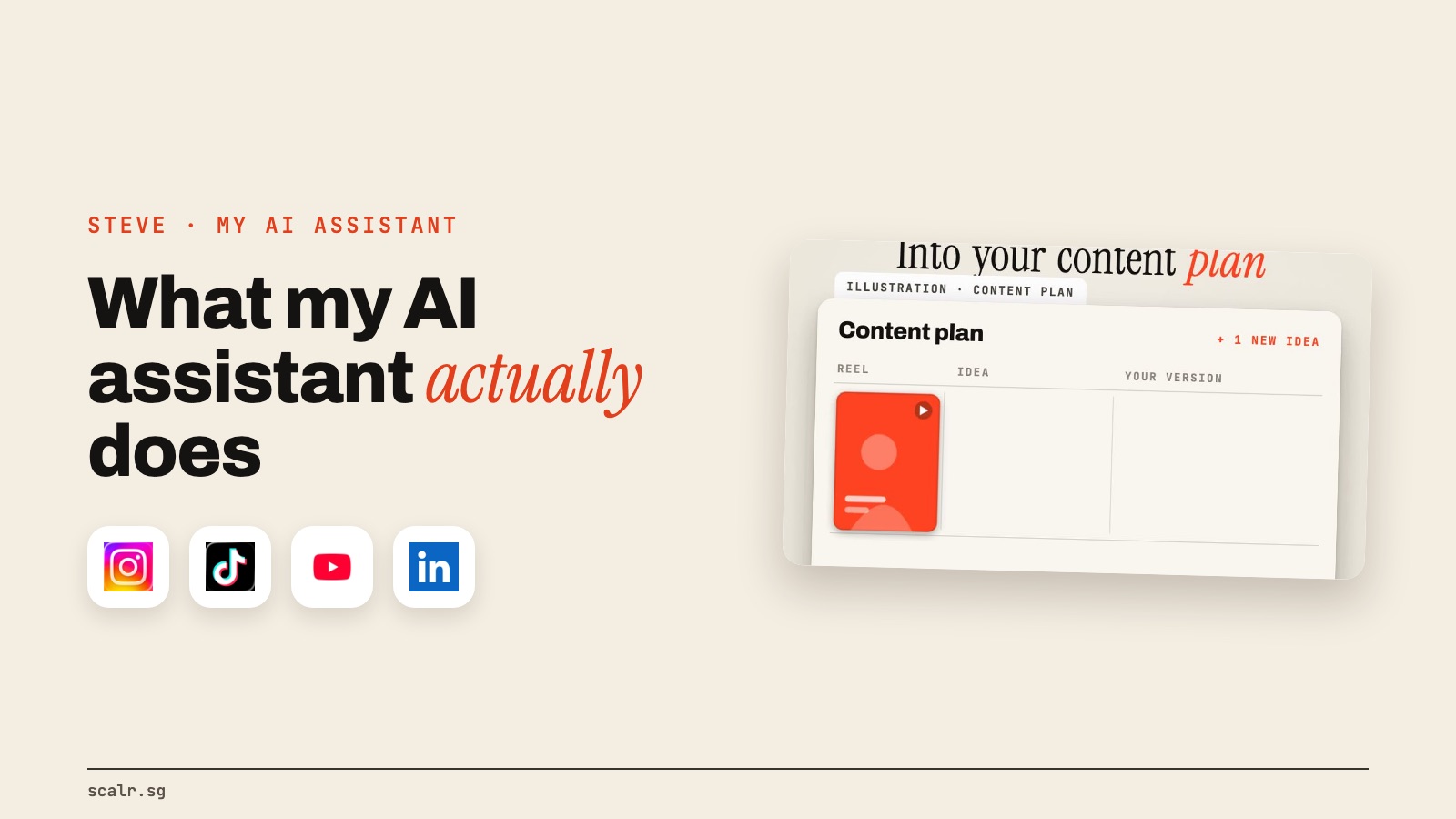
Everyone has a folder of saved reels they'll never open again. You see something useful, you tap save, and that's the last time you think about it. Mine doesn't work like that anymore. I text the reel to my AI assistant, and it goes straight into my content plan with a note on how I'd do my own version.
My assistant is called Steve. I've run it for almost half a year, and it now handles a big share of the admin in my business. It's built on Hermes Agent, the free, open-source assistant I wrote about separately. Here's what it actually does, what one could do for you, and why it's a different thing from opening ChatGPT.
What does my AI assistant do for me?
Ten jobs, all of them running today, all of them coming to one group chat on my phone.

- Reels I like go into my content plan. I send a link, and it lands in the plan with the idea pulled out and a first take on my version.
- Receipts and invoices go into my books. I photograph a receipt or forward an invoice, and it's logged to the right category.
- It watches all seven of my social pages. Instagram, Facebook, TikTok, YouTube, LinkedIn, Threads and X. If a post fails to go out on any of them, I hear about it.
- It tells me how my posts are doing. Views and followers across the platforms, without me opening seven apps.
- It pings me the moment a new lead comes in from the free tools on my website, with the details I need to reply.
- It reads and sends my email for the routine stuff, so I'm only writing the emails that need me.
- It keeps track of client work and reporting, so nothing a client is waiting on slips past a week.
- It watches my website's numbers the way an SEO specialist would: what's converting, what's dropped.
- It flags new AI tools as they drop, because half my content is reacting to them first.
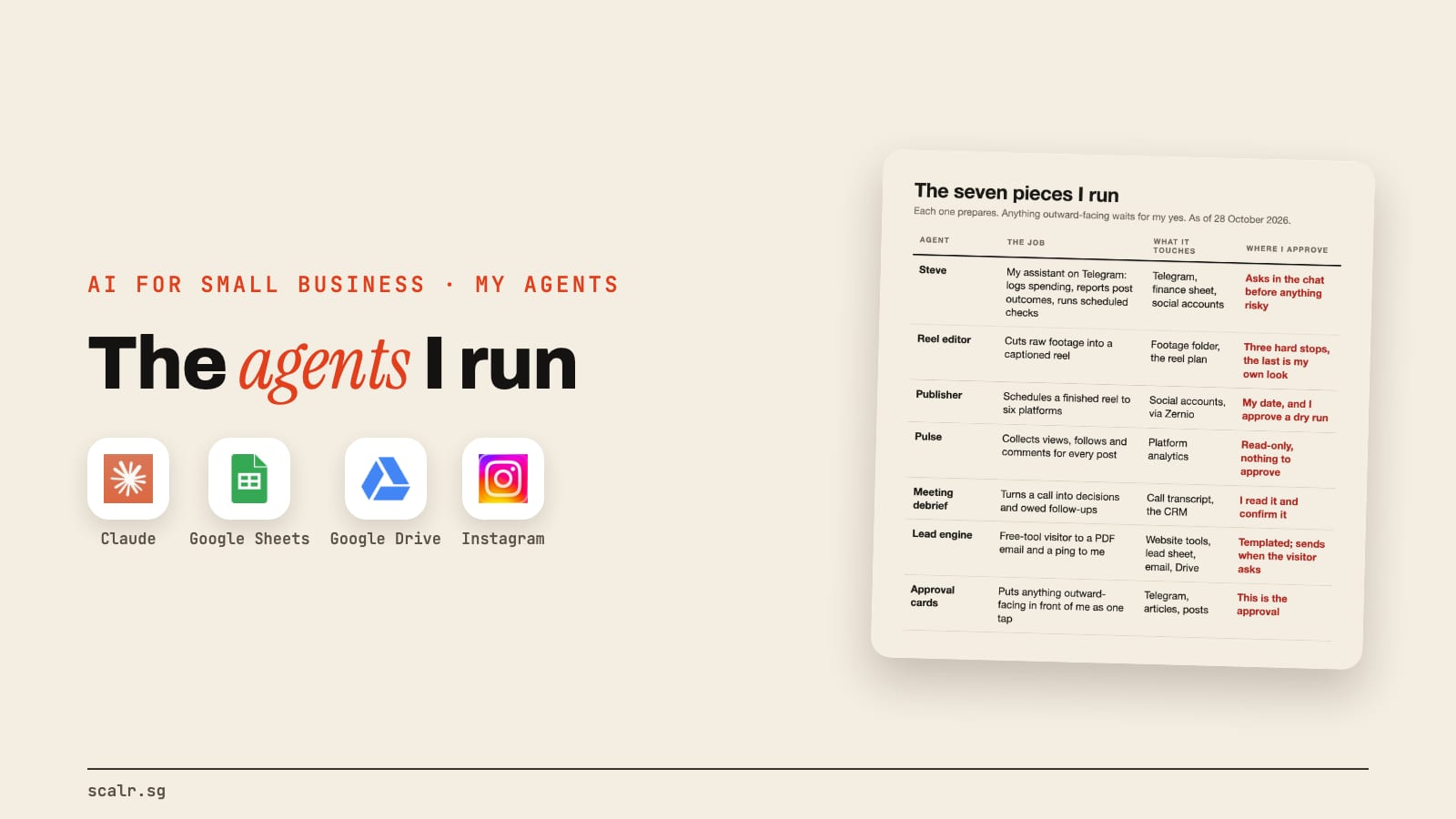
- It asks before anything risky. It puts the question to me in the chat and waits for my yes.

None of these is clever on its own. The value is that they all happen without me remembering to do them, and they all report to the same place.
What could an AI assistant do for your business?
The same software works for very different businesses. Hermes's own site collects hundreds of real user stories across 15 categories, from business and productivity to research and personal use.

Here are ten I'd start with for a small business:
- A morning brief at 7am with yesterday's sales, new enquiries and today's appointments.
- Invoice and receipt capture, so month-end isn't a shoebox of paper.
- Lead alerts the minute someone fills in your contact form, with a drafted first reply.
- Follow-up nudges for quotes you sent that haven't been answered in five days.
- Inbox triage, sorting what needs you from what can wait or be archived.
- Appointment reminders to customers the day before, from your calendar.
- Review monitoring, so you see a new Google review the same day and can reply.
- A weekly report on the numbers you actually care about, written in plain language.
- Competitor watching: a note when a competitor changes prices or launches something.
- Drafting the boring documents: quotes, simple proposals and standard replies, from your own templates.
Why is this better than a chat AI?
Because a chat AI waits for you. You open it, you explain your business again, you ask, and when you close the tab it forgets you. An assistant like Steve is different in four ways.
It runs on its own schedule. Mine does its jobs whether or not I remember to ask for them.
It comes to you. It lives in a chat app you already use, instead of a website you have to visit.
It remembers your business. Mine has a long-term memory of how my business runs, which I wrote about in the second brain behind my AI agent. I don't re-explain my prices or my clients every time.
It connects to your tools and does the job, instead of telling you how to do it, while still asking before anything risky.
Can you set one up yourself?
The software is free and open source, and if you're comfortable in a terminal, the Hermes Agent guide covers what it is and what the setup involves. You still pay for the AI model it runs on and for somewhere to keep it running.
The honest part is that the software is the easy bit. What took me months was deciding which jobs it should own, connecting each tool, and setting the rules for what it can do alone and what needs my yes. That part is different for every business, and it's the part I do for clients. We pick the first few jobs together, I connect your tools and set what it can do alone, and it reports to you in a chat app you already use. Book a free 30-minute call and we'll work out which of the ten above should go first for you.
FAQ
What is an AI assistant like Steve?
An AI assistant like Steve is software that runs all the time on a server, connects to your tools, works on a schedule and reports to you in a chat app such as Telegram. Steve runs on the free, open-source Hermes Agent.
How is an AI assistant different from ChatGPT?
ChatGPT waits for you to open it and forgets you when you close it. An AI assistant runs on its own schedule, messages you in a chat app, remembers your business and connects to your tools to do the work.
What can an AI assistant do for a small business?
A small business AI assistant can send a morning brief, capture invoices and receipts, alert you to new leads, nudge unanswered quotes, sort your inbox, remind customers of appointments and write a weekly report.
Is the software behind Steve free?
Hermes Agent, the software Steve runs on, is free and open source under the MIT licence. Running it still costs money for the AI model it uses and for a server to keep it running.
Does the AI assistant act without asking?
No. Steve asks first in the chat before anything risky, and only goes ahead on a yes.