Proof, not promises
See the work, live.
JSS Motorworkz is a traditional auto workshop in Singapore. I built its marketing from nothing as a team of one. Everything on this page is their own Google data, pulled straight from their dashboards.
The Google profile
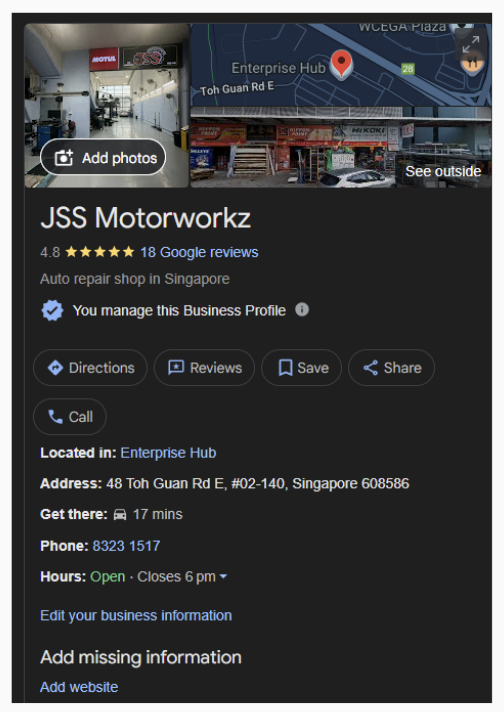
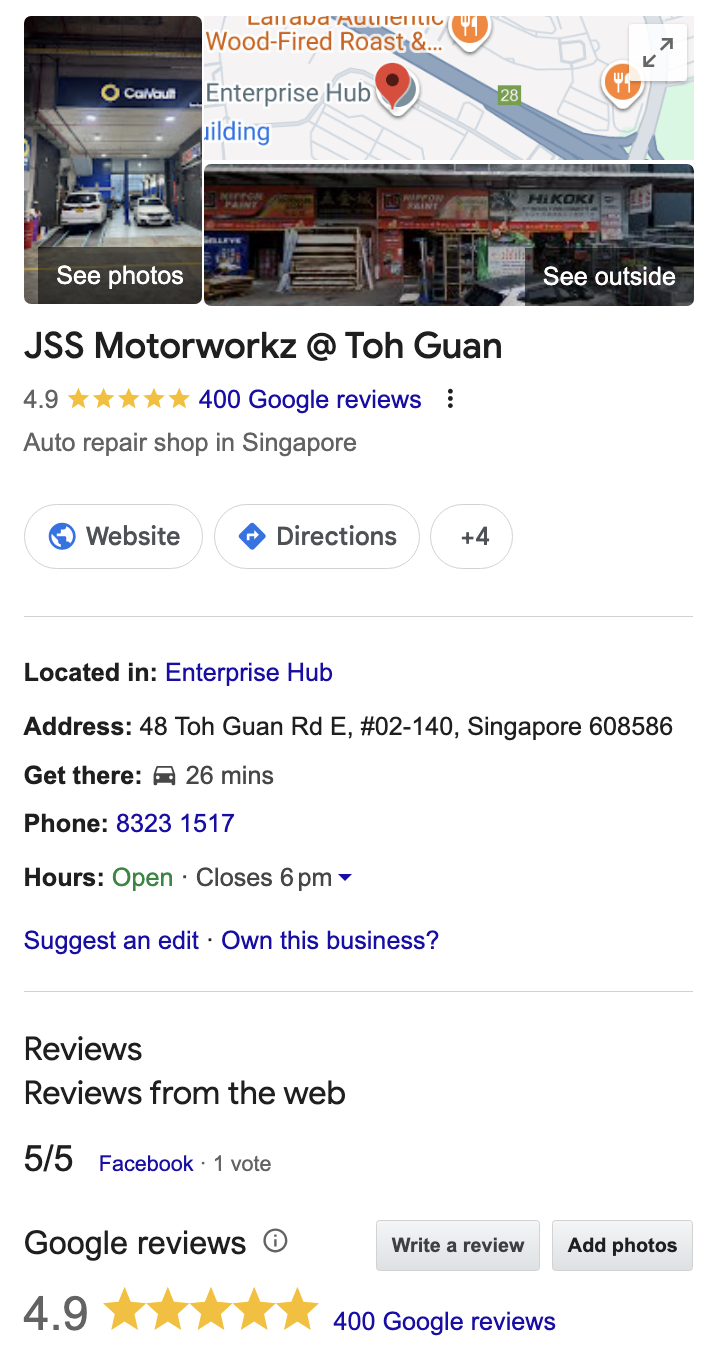
From 18 reviews and no website to 400 reviews at 4.9 stars.
Found by strangers
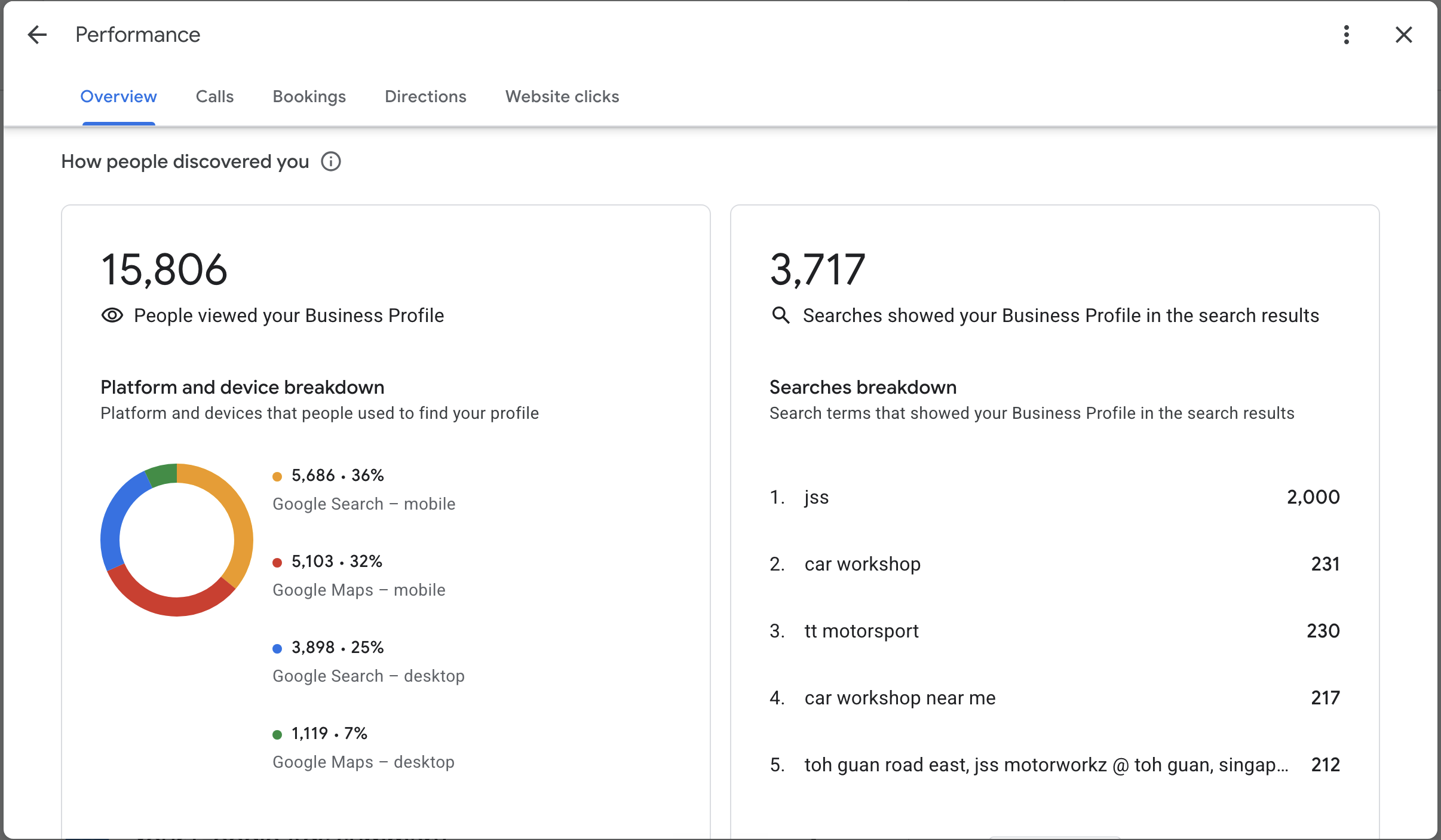
Found by people who were never referred.
Jan to Jun 2026
from "car workshop" to "car workshop near me"
calls, directions, website clicks
Customers ask AI too
Customers are starting to ask AI too.
More customers ask AI for recommendations every month. The same groundwork that wins Google search, real reviews, a proper website, clear services, is what AI answers draw from. Here's a real screen recording.
A real ChatGPT session recommending JSS Motorworkz, recorded as-is.
Behind the scenes
How one person runs all of this.
Strategy, website, ads, content, reviews, follow-up. What lets one person carry that breadth is the systems and AI I build for myself. I share how they work, for free, in the playbooks and write-ups.
Start
Want this for your business?
A free 30 minutes. We look at what customers find when they search for you today, and what a website and a properly run ads month would change.
- A 30-minute call. Free, no obligation, no hard sell.
- We look at your current presence: search, reviews, website, ads.
- You leave with a clear next step, whether or not we work together.